Loading...
Serving Reading, PA and surrounding areas. (484) 878-3671
Insulation slows heat loss, but only air sealing stops it. If your upstairs rooms are cold and your bills keep climbing, the attic is likely where your heat is going.
Attic air sealing in Reading, PA means closing every gap where conditioned air escapes from your living space into the attic, including around pipes, wires, light fixtures, and the tops of interior walls; most jobs are completed in a single day with no re-entry wait. Insulation slows heat transfer through solid surfaces, but it does nothing to stop air moving through openings. Sealing the attic floor first, then insulating on top, produces significantly better results than insulation alone. If you want to combine sealing with a spray foam application, our crawl space vapor barrier page explains how we handle moisture alongside air and thermal control in below-grade spaces.
A large share of Reading's homes were built before energy efficiency was a design consideration, and decades of renovation have added more penetrations through ceilings and walls. Every pipe, wire, and recessed fixture that was added after original construction is a potential air pathway. Collectively, these gaps can account for a significant share of a home's heat loss, and no amount of insulation on top of them changes that.
The work is done entirely in the attic, so your daily routine is barely disrupted. Unlike spray foam applications, there is no curing period and no need to vacate the home after the job is finished.
If your second floor or top-floor rooms feel noticeably colder than the rest of your home during Reading's winters, warm air is escaping through the ceiling into the attic. The rooms closest to the attic lose heat the fastest when the ceiling is not sealed. This is one of the most common complaints from homeowners in Reading's older neighborhoods, where original construction left plenty of gaps around framing and fixtures.
If your energy bills feel out of proportion to your square footage, especially compared to neighbors with similar homes, air leakage is often the culprit. In Reading's pre-1960 housing stock, a significant share of heating energy can escape through the attic before it ever warms the living space. A sealed attic is usually the highest-impact place to start addressing this.
Ice dams are ridges of ice that build up along the edge of a roof in winter and are a direct sign that warm air is escaping through the attic and melting snow unevenly. Reading gets enough winter precipitation that ice dams are a real concern, and they can cause water damage to ceilings and walls when melt water backs up under shingles. Attic air sealing addresses the root cause.
Hold your hand near a recessed light fixture in your ceiling or near the top of an interior wall on a cold winter day. If you feel cool air moving, that air is coming in from the attic through gaps around those fixtures. This is especially common in Reading's older homes where recessed lights or ceiling fans were added after original construction without any air sealing around the penetrations.
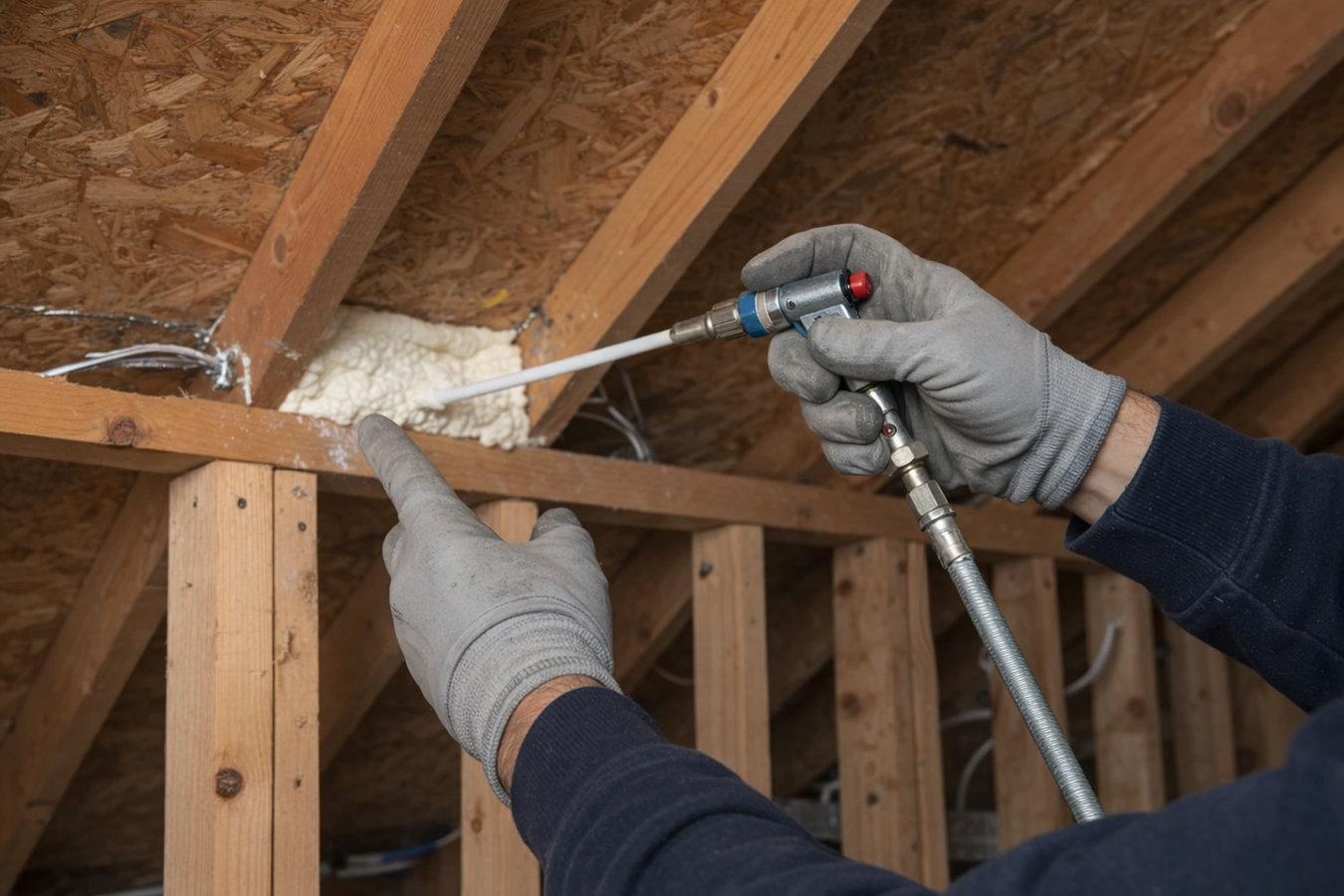
We seal attics in Reading and surrounding Berks County, covering every location where air moves between your living space and the unconditioned attic above. The most important spots are the tops of interior walls, around every pipe and wire penetration, around recessed light fixtures, and around the attic hatch itself, which is one of the most commonly overlooked heat loss points in any home. We use foam or caulk depending on the size of the opening, which is the correct approach; the right material for a half-inch gap around a pipe is different from the right material for a wide framing gap. For a broader picture of whole-house air sealing that includes rim joists and basement penetrations as well, air sealing services covers all of those zones together.
Most jobs also include a check of the existing insulation layer. If the insulation is compressed, settled, or thinly distributed, we discuss adding to it as part of the same project. Doing both at once is more cost-effective than two separate visits and produces a better thermal result. The most common insulation add-on for this type of project in older Reading homes is blown-in cellulose or fiberglass over a newly sealed attic floor.
For homes where the primary concern is spray foam rather than loose-fill insulation, we also offer attic sealing using spray foam as the sealant and insulation material in one step. Our crawl space vapor barrier service addresses the below-grade equivalent: closing moisture and air pathways in crawl spaces that are subject to ground moisture in addition to air movement.
Suited to homes where pipes, wires, and light fixtures have created air gaps through the ceiling over decades of renovation.
Suited to older homes where the framing along the top of interior walls was never sealed and allows significant air movement.
Suited to any home with an uninsulated or unweatherstripped attic access panel, one of the most commonly overlooked heat loss points.
Suited to homes that need both the air pathways closed and the insulation layer upgraded in the same project.
Reading sits in a climate zone where average January lows hover around 22 degrees Fahrenheit and the heating season runs from October through April. The city's housing stock is overwhelmingly pre-1960, with many homes built before the 1940s. These homes were designed with no consideration for air sealing, and six or seven decades of plumbing and electrical updates have added more penetrations through ceilings and walls. The result is a home that leaks warm air through dozens of small openings that are impossible to see from below but collectively represent a significant share of annual heating costs.
Many Reading neighborhoods consist of row homes and twins where the attic configuration is different from a detached house. Party walls between units create additional air pathways that a contractor unfamiliar with attached housing might miss entirely. Homeowners in Pottstown, Norristown, and Bethlehem face the same conditions in their older neighborhoods, and the same sealing approach applies.
Both Met-Ed and PPL Electric Utilities, the two main electricity providers in the Reading area, offer rebate programs for insulation and air sealing improvements. The federal government also offers an energy efficiency tax credit worth up to 30% of the project cost for qualifying weatherization work. A contractor familiar with these programs can help you apply before work begins so the paperwork is in order from the start.
When you reach out, we ask about your home's age, any comfort complaints you have noticed, and whether you have existing insulation. This helps us come prepared with the right materials. Most inquiries receive a response within 1 business day.
A technician goes into your attic to assess existing insulation, identify the major air leakage points, and check for any moisture or ventilation issues. This visit takes 30 to 60 minutes, and we walk you through what we found before asking you to commit to anything.
You receive a written estimate covering the scope of work, the locations to be sealed, and the total cost. We confirm at this stage whether a permit is required and explain how rebates from Met-Ed or PPL Electric may apply to your project.
On the day of the job, the crew moves existing insulation, seals every gap they find using foam or caulk depending on the opening size, then replaces the insulation. For a typical Reading home, expect the crew to be working for most of a full day. No curing period is needed; your home is usable immediately after the work.
We respond within 1 business day. We will tell you exactly what we find and what it will cost before you commit to anything.
(484) 878-3671We provide a free written estimate before any work begins and document the materials and coverage installed on every job. You get clear scope and pricing up front, with no pressure to sign on the spot.
Many Reading neighborhoods are made up of attached row homes and twins where the attic may share boundaries with neighboring units. We know how to identify and seal the additional leakage points these configurations create, which a contractor used to detached homes might miss.
We work throughout Reading and the surrounding area, including West Reading, Wyomissing, Laureldale, and other boroughs close to the city. If you are just outside the Reading city limits, we still come to you.
We walk every customer through what rebates and tax credits their project may qualify for before work begins. PPL Electric and Met-Ed both serve Reading-area homes, and the federal energy efficiency tax credit is currently available for qualifying weatherization work.
The Building Performance Institute sets the professional standard for home energy work in the United States, and their guidelines cover attic air sealing in detail. We follow those standards on every job, including the requirement to assess ventilation before sealing so the work does not create moisture problems in a space that was previously vented by air leaks. ENERGY STAR publishes homeowner-facing guidance on the same topic that is worth reading before your estimate.
Addresses moisture intrusion from the ground up in crawl spaces, complementing the air sealing work done above.
Learn moreWhole-house air sealing that extends beyond the attic to include rim joists, basement penetrations, and exterior wall gaps.
Learn moreFall booking fills up fast in Reading as homeowners prepare for heating season. Call or submit a request today to get your assessment scheduled before the cold arrives.