Loading...
Serving Reading, PA and surrounding areas. (484) 878-3671
Reading commercial buildings lose heat all winter and trap it all summer. We assess your building, recommend the right material, handle the permits, and install insulation that meets Pennsylvania code and actually performs.
Commercial insulation in Reading, PA slows heat movement through your building's walls, roof, and floors - most projects are completed in one to three days with permits handled by the contractor and an inspection sign-off from the City of Reading's Bureau of Inspections and Permits.
Reading sits in Pennsylvania's Climate Zone 5, where January lows regularly approach 22 degrees. Buildings that are not insulated to a level this climate demands bleed heat all winter. The result shows up on your PPL Electric bill every month from November through March. For older commercial buildings - and Reading has many of them - the problem is often compounded by wall cavities that were never insulated at all, or original materials that have settled, compressed, or absorbed moisture over decades.
Commercial insulation work connects naturally with retrofit insulation for residential properties - both involve adding thermal performance to an existing, occupied building without demolition, and we apply the same assessment-first approach to both types of projects.
If your gas or electric bills climb sharply each November and stay high through March, heat is escaping your building faster than it should. Reading winters are cold enough that a poorly insulated building shows up clearly on utility statements. This is not a subtle problem, and it compounds every year the insulation issue goes unaddressed.
Walk through your building on a cold morning. If some spaces feel noticeably colder than others, especially near exterior walls, above drop ceilings, or in corner offices, insulation is missing or has failed in those spots. Uneven temperatures are one of the clearest signals that your building envelope has gaps.
Visible gaps around window frames, drafts near outlets on exterior walls, or condensation forming on interior surfaces in winter all indicate that your building's thermal barrier has failed somewhere. In Reading's older commercial stock, these problems are common and often go unaddressed for years because the cause is not obvious.
If your heating or cooling system seems to run all day without getting the building to a comfortable temperature, the problem is often the building envelope, not the equipment. Insulation that is missing, compressed, or moisture-damaged forces your HVAC to work much harder than it should, adding wear and operating cost on top of energy waste.
Every commercial project starts with an on-site assessment. We look at what is currently in place, identify areas that are missing insulation or have failing material, and check for moisture damage before recommending anything. In older Reading buildings, this step sometimes turns up surprises - insulation that was installed decades ago and has since degraded, or areas that were never insulated at all. We report what we find clearly, with a written proposal that explains what work is recommended, what materials will be used, and what it will cost.
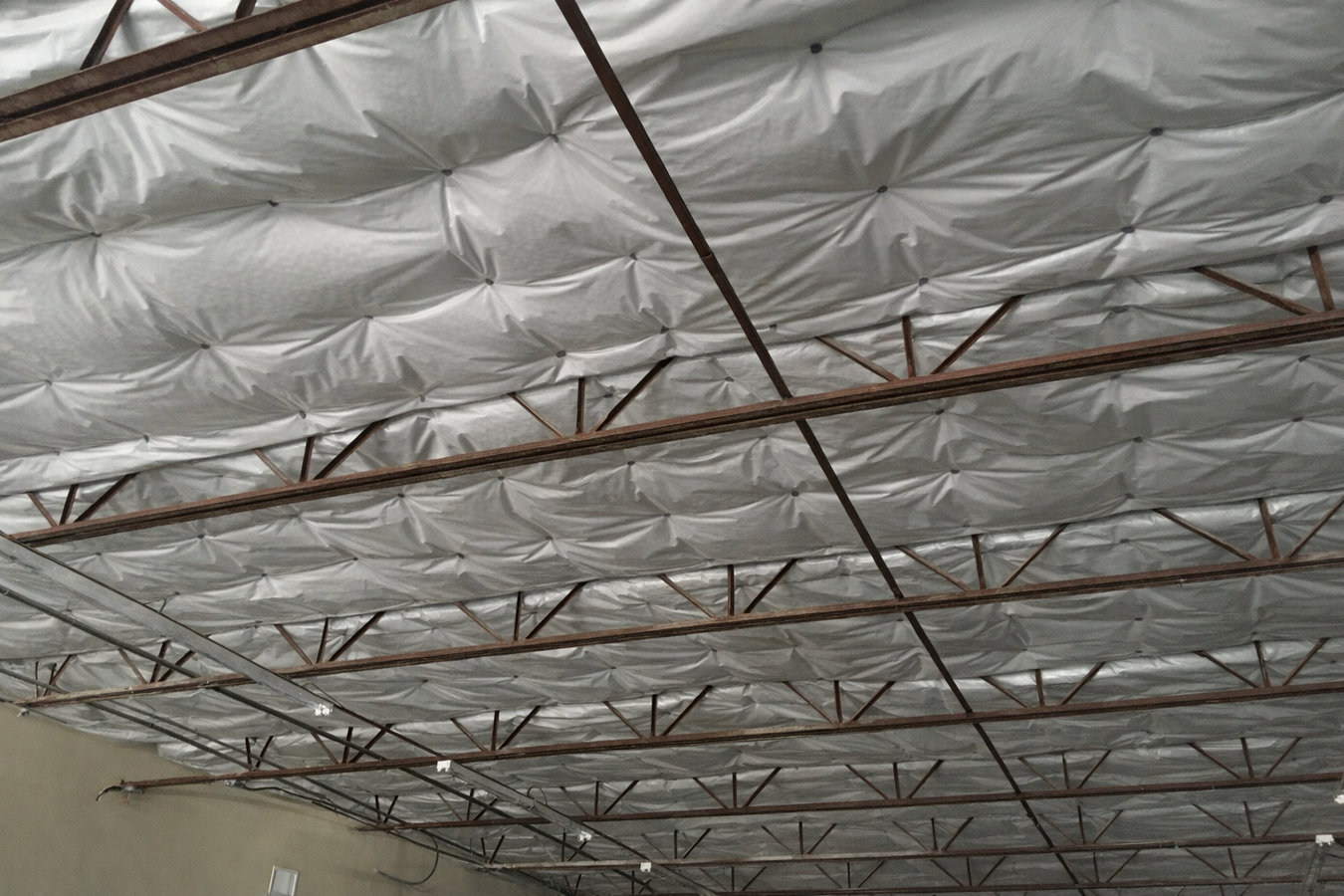
For commercial applications we most commonly use three materials, matched to where they perform best. Spray foam expands to fill gaps and creates an air seal as well as a thermal barrier - it is particularly useful in irregular spaces or areas where air leakage is a known problem. This connects directly to the same approach we use for spray foam insulation in residential buildings. Blown-in loose fill is typically used in open attic spaces and wall cavities where access allows. Rigid foam board is used on exterior walls and rooflines where a continuous thermal layer matters more than filling a cavity.
For most commercial work in Reading, we handle the permit application with the City of Reading's Bureau of Inspections and Permits and coordinate the required inspection. The city inspection is actually in your favor - it means a third party confirms the work was done correctly. The Pennsylvania Department of Labor and Industry Uniform Construction Code governs commercial insulation work statewide, and our installations meet those requirements as a standard practice, not an afterthought.
For buildings with moisture issues - common in Reading's Schuylkill River valley geography - we assess vapor management as part of any insulation plan, not as a separate add-on. Insulation that traps moisture against your building's structure causes more damage over time than no insulation at all.
Best for irregular commercial spaces, areas with known air leakage, and buildings where a combined air seal and thermal barrier is the goal.
Suited to open attic spaces and wall cavities in older commercial buildings where access allows even distribution.
Used on commercial exterior walls and rooflines where a continuous, unbroken thermal layer matters most.
Required when old, moisture-damaged, or pest-contaminated material needs to come out before new insulation goes in.
We file with the City of Reading and coordinate inspections for all projects where permits are required.
Reading has a significant inventory of older commercial and mixed-use buildings, many built before modern insulation standards existed. These buildings often have irregular wall cavities, outdated materials, and areas that were never insulated at all. The cold winters in Berks County mean that every gap in the building envelope is actively costing money from November through March. For building owners on tight margins, the utility bill is often the most direct and immediate result of poor insulation - and the most direct argument for addressing it.
Reading's position in the Schuylkill River valley also creates humidity conditions that are harder on insulation than inland locations. Moisture that gets trapped inside walls or ceilings degrades insulation over time and creates conditions for mold. A contractor working in Reading should be thinking about vapor management as part of any insulation plan, not just heat resistance. This is especially true for ground-floor commercial spaces in older buildings along the river corridor. Building owners throughout Harrisburg and Lancaster face similar older building stock conditions and call us for the same reasons.
Pennsylvania's Uniform Construction Code governs commercial insulation work statewide, and the City of Reading enforces it locally through the Bureau of Inspections and Permits. Building owners in Pottstown and neighboring communities face the same code requirements. Working with a contractor who understands this process, pulls permits correctly, and schedules inspections protects you from unpermitted work that can create problems when you sell, refinance, or file an insurance claim.
We ask a few basic questions - building type, age, and what problem you are trying to solve. You will hear back within one business day. We then visit the building to look at what is currently in place, check for moisture damage, and understand the scope before quoting anything.
After the assessment, you receive a written proposal with recommended work, materials, and cost. If a permit is required, we handle the application with the City of Reading's Bureau of Inspections and Permits. Ask to see confirmation the permit has been filed before work begins.
The crew arrives with materials and works through the areas outlined in the proposal. Most commercial jobs are completed in one to three days. Spray foam areas need to be vacated for several hours after application - we tell you this in advance so you can plan around it.
Once work is done, we schedule the required city inspection and clean up the work areas. After the inspection passes, you receive the permit sign-off. We walk you through what was done so you know exactly what was installed and where.
No obligation, no pressure. We reply within one business day and bring a written proposal to your building.
(484) 878-3671We do not quote commercial insulation jobs from a distance. Every estimate starts with a visit to the building where we assess what is currently in place, check for moisture damage, and understand the layout before recommending anything. Reading's older commercial stock requires this - no two buildings are the same, and a number given without a site visit is not a reliable estimate.
Most commercial insulation projects in Reading require permits from the City's Bureau of Inspections and Permits. We handle the application and coordinate the inspection so you do not have to navigate that process yourself. Unpermitted commercial work creates problems at sale, refinancing, and insurance claims - we do not leave you exposed to that risk.
PPL Electric serves the Reading area and offers rebate programs for commercial customers who make qualifying energy efficiency upgrades. We are familiar with the current program requirements and can tell you whether your project qualifies before work begins, not after. The savings can be meaningful for larger projects, and they require specific installation documentation to claim.
Our commercial installations follow the material performance and installation practice standards published by the North American Insulation Manufacturers Association. For spray foam work specifically, we follow the health and safety protocols established by the Spray Polyurethane Foam Alliance, which includes proper area evacuation, off-gassing periods, and post-installation verification.
Commercial building owners in Reading get a contractor who does the upfront work correctly, handles the permit process, and installs to a documented standard. That combination matters when the city inspector shows up, when your insurer asks questions, and when you want to show a future buyer that the work was done right.
Spray foam creates both an air seal and a thermal barrier in a single application, making it a common choice for commercial building envelopes with irregular cavities.
Learn moreRetrofit insulation applies the same non-demolition approach to occupied residential properties, adding performance without tearing out walls.
Learn morePPL rebate funding is first-come, first-served - acting now means you capture savings that may not be available if you wait until next fall.