
Loading...
Serving Reading, PA and surrounding areas. (484) 878-3671
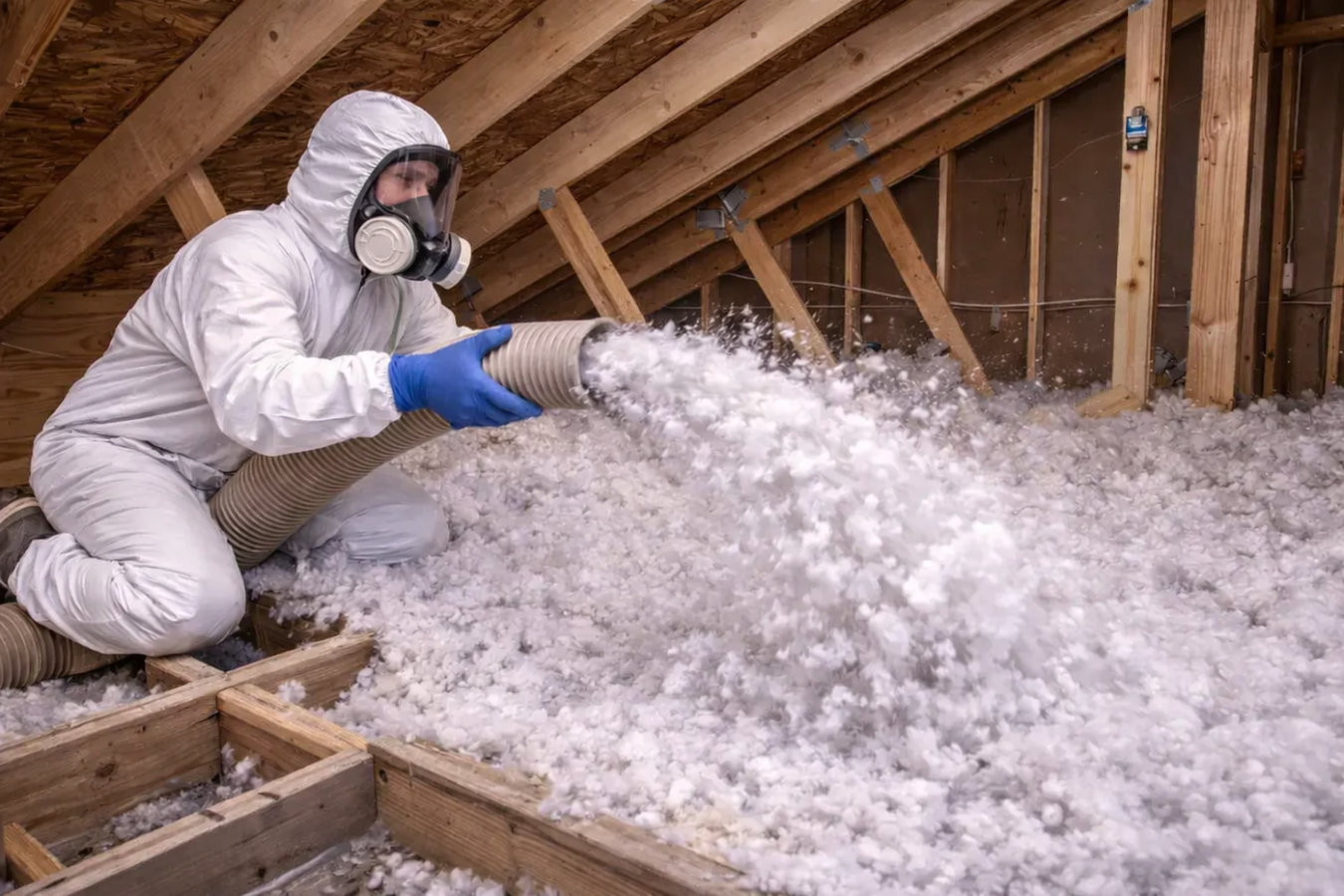
Reading Insulation is an insulation contractor serving Lancaster, PA with blown-in insulation, spray foam, and crawl space services for the city's historic brick row homes and older residential neighborhoods. We respond to all inquiries within one business day.
Lancaster city's row homes were built with attic framing that pre-dates modern insulation standards. Most have irregular joist spacing, low-pitch roof lines, and ceiling profiles that make batt insulation impractical. Blown-in cellulose or fiberglass fills every corner and gap in these attics without needing full access across the floor, which makes it the most effective method for homes built before 1940. Blown-in insulation can also be installed on top of existing material where the old insulation is still intact, avoiding the cost and disruption of full removal.
Lancaster's older row homes were frequently built with stone or brick foundations and no sill plate insulation. The rim joist and sill plate area is where cold air enters most freely in homes of this type, and it is where spray foam has the most immediate impact. Closed-cell foam applied at the rim joist and basement sill plate seals air infiltration and adds a moisture barrier in a single application, which matters a great deal in homes sitting on clay-heavy soil.
Lancaster's clay-heavy soil holds rainwater near foundations for days after a storm, and that moisture finds its way into unprotected crawl spaces through the soil and through gaps in old brick or stone foundation walls. Cold floors, musty odors, and high basement humidity in summer are all signs that the crawl space is not properly sealed. Crawl space insulation and a continuous vapor barrier address the moisture source before it reaches the living space above.
Lancaster city's densely packed row homes share party walls that carry heat laterally between units, but the top floor is where most heat escapes to the outside in winter. Homes built before 1950 across the Northwest, Northeast, and Southwest quadrants often have little or no insulation on the attic floor, and whatever was added in the 1970s or 1980s has settled over time. A properly insulated attic floor is the most direct path to reducing heating and cooling costs in these homes.
In a Lancaster row home, the attic floor is a patchwork of plaster, original wood framing, and decades of repairs. Every gap around a light fixture, wiring penetration, or framing member is a path for warm air to escape in winter. Air sealing before blown-in installation closes these pathways and dramatically improves the effectiveness of the insulation that goes on top. Without it, even a well-insulated attic still leaks heat through the air gaps.
Lancaster's slow-draining clay soil and hot, humid summers make vapor barrier installation one of the most important baseline upgrades for any home with a crawl space or exposed basement floor. Without a continuous vapor barrier, ground moisture evaporates into the air below the floor system and works its way into floor joists, subfloor, and living areas. A proper barrier paired with crawl space insulation stops the moisture cycle at the source.
Lancaster city is one of the oldest inland cities in the United States, and its housing reflects that age. A very large share of homes were built before 1940, and many predate 1920. These homes were constructed with materials and techniques that are now a century old: brick and fieldstone foundations, plaster walls, single-pane windows, and no concept of continuous insulation or air barriers. Walking through Cabbage Hill in the Northwest quadrant or the row home blocks near the historic downtown, nearly every home on the street shares the same profile: dense, attached, old, and leaking heat.
Lancaster's winters are cold enough to cause real heat loss in poorly insulated homes. Average January temperatures drop into the mid-20s Fahrenheit overnight, and the area goes through repeated freeze-thaw cycles from November through March. Lancaster also receives 25 to 30 inches of snow annually, and ice dams on older row homes are a common winter problem when attic insulation is thin and the roof deck warms unevenly. Lancaster County's climate data is tracked by the National Weather Service Philadelphia/Mount Holly office.
Below ground, Lancaster County's clay-heavy soil creates a separate set of problems. Clay expands when wet and drains slowly, which means ground moisture sits against foundation walls for extended periods after rain. Stone and brick foundations common in the older housing stock are porous and allow moisture to migrate inward. Basements and crawl spaces in Lancaster homes tend to be damp in spring and summer, contributing to high indoor humidity and the conditions where mold and wood rot begin.
Our crews work regularly in Lancaster city and pull permits through the City of Lancaster Bureau of Code Compliance when the scope of work requires it. The brick row homes we work on most frequently in Lancaster city have small attic hatches, plaster ceilings, and limited side-yard access. We plan equipment staging before arrival, use hose lengths appropriate for narrow alley access, and take care not to disturb original plaster when installing blown-in material through the attic hatch.
Lancaster is a city divided into four distinct quadrants, and each has its own housing character. The Northwest quadrant, including Cabbage Hill, has some of the oldest and densest row home blocks in the city. The Southeast quadrant includes the historic downtown and the area around Lancaster Central Market, one of the oldest continuously operating farmers markets in the country. Homes near the market and the historic core tend to be among the oldest in the city. The Northeast and Southwest quadrants have a broader mix of ages and styles, including some mid-20th century construction on slightly larger lots.
We serve Lancaster city and also work across the broader county. Homeowners who find us through Lancaster often refer us to neighbors in Reading, where the housing stock and climate conditions are closely comparable. We also serve Lebanon to the north, where older homes along the Lebanon Valley corridor face many of the same insulation challenges as Lancaster city properties.
Reach us by phone or through the contact form. We respond within one business day. No commitment or deposit is required to get an estimate.
We visit your Lancaster home to assess the attic, crawl space, or wall cavities before quoting. You receive a written estimate with materials, scope, and pricing itemized clearly, so you know exactly what you are paying for before we schedule the work.
Most Lancaster jobs are finished in a single day. For row homes with limited access, we confirm equipment staging with you in advance. We protect floors and work areas and clean up fully before we leave.
Before we close out any job, we walk through the completed work with you, explain what was installed and where, and answer any questions. If anything is not right, we address it before leaving the property.
We serve Lancaster city homeowners across all four quadrants, from Cabbage Hill to the Southeast historic district. No sales pressure, no hidden fees. Just an honest assessment and a clear written quote.
(484) 878-3671Lancaster city is one of the oldest inland cities in the United States, with roots going back to the early 18th century. The city has a population of around 58,000 people and serves as the county seat of Lancaster County. It sits at the geographic center of a county that is internationally known for its Amish community, with working farms, horse-drawn buggies, and rural roads visible within a few miles of the city limits. Inside the city, the character is decidedly urban: dense residential neighborhoods, a walkable downtown anchored by Lancaster Central Market, and a housing stock that reflects more than a century of working-class history.
The city is organized into four quadrants, each with its own identity. The Northwest quadrant includes Cabbage Hill, a dense residential neighborhood known for its brick row homes, many built for factory and railroad workers in the late 1800s and early 1900s. The Southeast quadrant contains the historic downtown, Clipper Magazine Stadium, and a mix of residential and commercial properties. Across all four quadrants, a large share of the housing was built before 1950, and many homes predate 1920. Lancaster city has one of the oldest urban housing stocks in Pennsylvania.
About 40 percent of Lancaster city's housing units are owner-occupied, and many residents have lived in their homes for years or decades. That long-term ownership culture means homeowners invest in maintenance and upgrades rather than chasing resale. Contractors working in Lancaster frequently serve communities across the broader region, including Reading to the northeast, which shares a similar vintage of row home construction and the same freeze-thaw climate patterns. Lancaster city and Reading are among the densest concentrations of pre-war residential housing in the state.
Spray foam creates an airtight seal that stops air leaks and maximizes energy savings.
Learn moreProper attic insulation keeps conditioned air inside and reduces heating and cooling costs.
Learn moreBlown-in insulation fills gaps and hard-to-reach areas for complete, even coverage.
Learn moreSafe removal of old, damaged, or contaminated insulation before new material is installed.
Learn moreInsulating your crawl space reduces moisture, drafts, and heat loss from below your floors.
Learn moreWall insulation reduces outside noise and keeps indoor temperatures stable.
Learn moreAir sealing closes gaps and cracks that let conditioned air escape and drive up energy bills.
Learn moreBasement insulation prevents cold floors, moisture buildup, and energy loss at the foundation.
Learn moreClosed-cell foam provides the highest R-value per inch and acts as a moisture barrier.
Learn moreOpen-cell foam expands to fill every cavity and delivers excellent soundproofing.
Learn moreAttic air sealing blocks the stack effect that pulls warm air out of your home in winter.
Learn moreA vapor barrier keeps ground moisture out of your crawl space and living areas above.
Learn moreProfessional vapor barrier installation protects your home from humidity-related damage.
Learn moreRetrofit insulation adds performance to existing walls and attics without major renovation.
Learn moreCommercial insulation solutions for offices, warehouses, and mixed-use buildings.
Learn moreServing these cities and communities.
Call Reading Insulation or submit a contact form and we will respond within one business day. Lancaster's winters are hard on older homes. The right insulation makes a real difference.