
Loading...
Serving Reading, PA and surrounding areas. (484) 878-3671
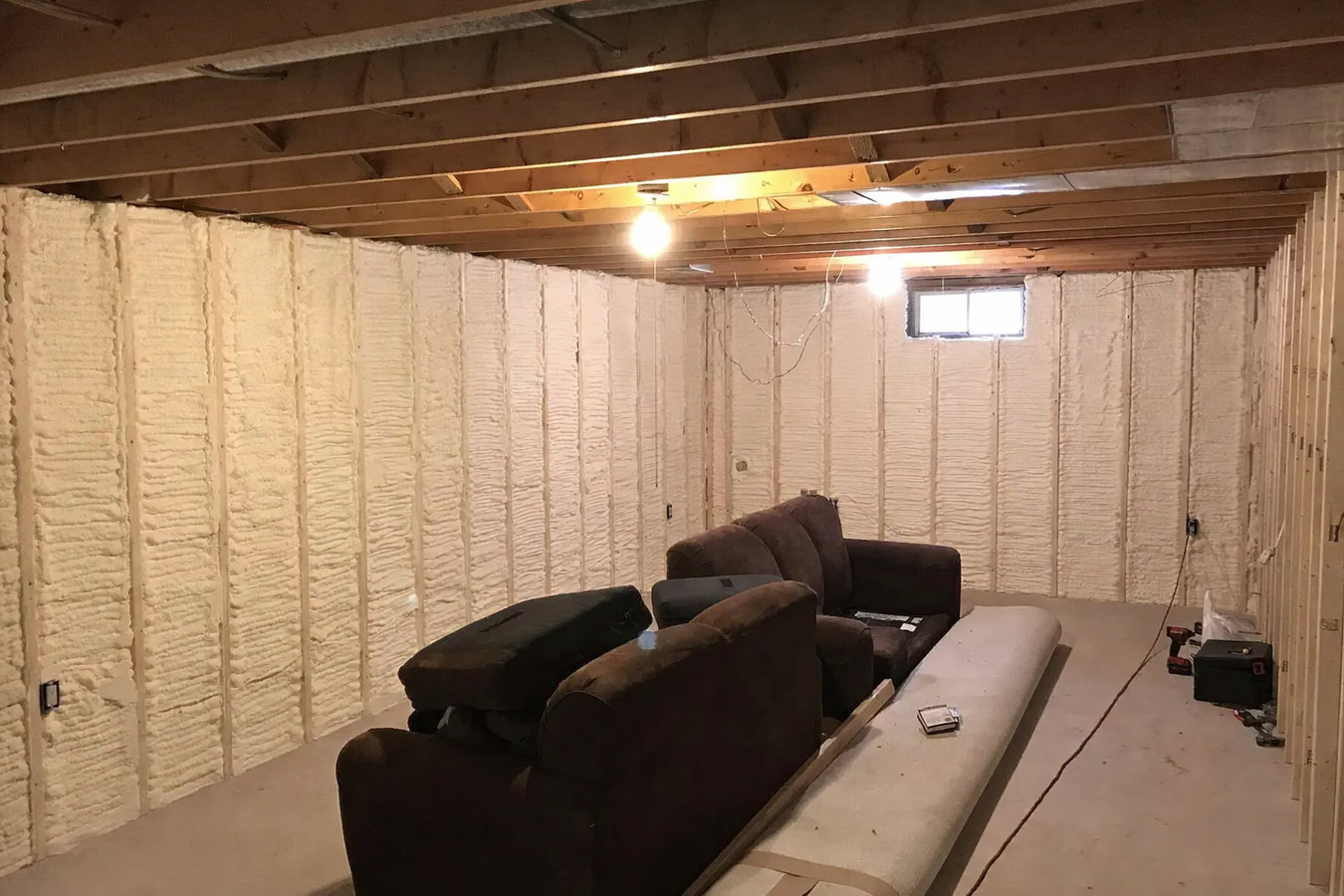
Reading Insulation provides insulation contractor services throughout Easton, PA, specializing in basement insulation, attic upgrades, and wall insulation for the city's pre-1940 brick rowhouses and river-adjacent homes. We serve Easton homeowners and every Lehigh Valley inquiry receives a reply within one business day.
Easton sits at the confluence of the Lehigh and Delaware Rivers, and homes in lower parts of the city face higher basement moisture pressure than homes farther from the water. Uninsulated rim joists and foundation walls transfer that cold and moisture directly into the floors and rooms above. Basement insulation with closed-cell foam at the rim joist addresses both the thermal and moisture problems in one application, which is why it is the right starting point for most Easton basements.
Easton's cold winters and regular freeze-thaw cycles from December through March put steady pressure on any home that is losing heat through the ceiling. Older rowhouses in the College Hill and downtown-adjacent neighborhoods commonly have attic floors with little or no insulation, or with original materials that have long since compressed and lost effectiveness. Upgrading attic insulation stops the largest single source of heat loss in most of these homes.
Clay-heavy soil throughout the Lehigh Valley holds moisture against foundation walls and under crawl spaces long after rain events. An uninsulated, open crawl space in Easton lets that moisture and cold move directly into the floor structure above. Closed-cell foam at the crawl space walls and a vapor barrier on the ground together address the moisture and the thermal loss simultaneously.
Brick and stone rowhouses near Centre Square and throughout Easton's older neighborhoods were built without insulation in the wall cavities. Exterior walls that are cold to the touch in January are a reliable sign that the cavities are empty. Blown-in insulation added from the exterior or interior through small drilled holes fills those cavities without requiring demolition of the original plaster walls.
Homes built before 1940 throughout Easton have accumulated decades of gaps around old pipe penetrations, chimney chases, and framing members. These air leaks let warm air escape in winter and hot, humid air enter in summer. Sealing those pathways at the attic floor and rim joist before adding insulation locks in the performance of everything else installed in the home.
Easton's proximity to the rivers and its clay-heavy soil make ground moisture in crawl spaces and basements a persistent issue for homeowners. A properly installed vapor barrier on the crawl space floor prevents ground moisture from evaporating into the subfloor and living areas above. Combined with crawl space insulation, vapor control is the foundation of a dry, comfortable Easton home.
A large share of Easton's housing was built before 1940, with a substantial portion dating to the late 1800s and early 1900s. These homes were constructed with stone or brick foundations, wood framing, and original plaster walls, and none of them were built with insulation in the cavities. The building standards of that era relied on heavy masonry and thick walls to manage temperature, not on trapped air. That approach worked tolerably when energy was cheap, but it means today's Easton homeowners are heating and cooling homes that have almost no thermal resistance in the walls or attic.
Easton's location at the confluence of the Lehigh and Delaware Rivers creates moisture conditions that affect the entire city, not just homes close to the water. Clay-heavy soil throughout the Lehigh Valley drains slowly and holds moisture against foundations for days after heavy rain. Low-lying sections of Easton have a documented history of flooding, with significant events in 2004 and 2006 that affected basement and crawl space conditions well after the water receded. The National Weather Service Mount Holly office tracks the regional precipitation and flood patterns for this part of eastern Pennsylvania.
Summers in Easton are hot and humid, with July highs typically in the upper 80s Fahrenheit. That combination of heat and moisture accelerates deterioration of older materials and drives condensation in crawl spaces and basements that lack vapor control. Winter freeze-thaw cycles from December through March stress masonry and crack concrete. An insulation and air sealing strategy that accounts for both ends of the seasonal spectrum is the only way to address Easton's specific climate demands.
We work regularly in Easton and are familiar with the permit process through the City of Easton Building and Code Enforcement office. The pre-1940 brick rowhouses and fieldstone-foundation homes we encounter throughout the city's older neighborhoods require different handling than a newer suburban build. Plaster walls, irregular framing, and narrow cavity widths are standard in this housing stock, and our approach accounts for all of it before a job starts.
Easton is compact and walkable, with Route 22 and the bridge over the Delaware being landmarks every local knows. The downtown area around Centre Square has seen real reinvestment in recent years, and the homes in the College Hill neighborhood and along the streets west of downtown are getting the same attention from owners who are putting money into these older houses. The Crayola Experience on Centre Square is the city's most visible landmark; the neighborhoods within a few blocks of it include some of Easton's densest rowhouse stock.
Easton sits on the eastern edge of the Lehigh Valley, and we also serve homeowners in Allentown, about 20 miles to the west. Allentown and Easton share many of the same housing characteristics: pre-war construction, dense rowhouse neighborhoods, and the same Lehigh Valley climate pressures. If you are in Phillipsburg or Wilson Borough just across the river, or anywhere in Northampton County, we serve those areas too.
Call us at (484) 878-3671 or submit a request through the contact form. Every Easton inquiry gets a reply within one business day, and we confirm a time for an on-site visit at your convenience.
We assess the attic, walls, crawl space, and basement to understand the full picture. Homes near the rivers get particular attention for moisture conditions at the rim joist and foundation. You receive a written estimate with no obligation to proceed.
Most Easton attic and basement rim joist jobs are completed in one day. Wall insulation in older rowhouses may take one to two days depending on the number of wall cavities being filled. You do not need to vacate the home.
We walk through the completed work with you before leaving so you can see exactly what was done and ask any questions. Any issues that come up after the job, call us directly and we come back.
We serve Easton and the surrounding Lehigh Valley. Free on-site estimates, written quotes, and no pressure. If your basement or crawl space has had moisture problems, that is exactly what we assess.
(484) 878-3671Easton is a city of roughly 28,000 people at the eastern edge of the Lehigh Valley, where the Lehigh River meets the Delaware River. That confluence has defined the city's geography and character since its founding: transportation, commerce, and flood risk have all followed the water here. Easton has one of the oldest continuously operating farmers markets in the United States, held in Centre Square since the 18th century, and the downtown has seen significant reinvestment in recent years as Lehigh Valley residents from Allentown and Bethlehem, and transplants from New Jersey and New York, have discovered the city.
The housing stock reflects the city's age. Brick and stone rowhouses dominate the blocks nearest to downtown, many built between 1880 and 1930. The College Hill neighborhood climbs the ridge above the city center and has a mix of detached single-family homes from the 1920s through the 1950s. Further out, smaller neighborhoods of postwar homes round out the city's residential character. Multi-family buildings are common throughout, and a significant share of the city's units are rentals, particularly in the older downtown-adjacent blocks.
Easton is part of the broader Lehigh Valley region, one of the fastest-growing areas in Pennsylvania. That growth has brought new investment into older Easton neighborhoods, and homeowners who are renovating these older properties need contractors who understand how to work on pre-war construction. Nearby communities we also serve include Bethlehem, about 15 miles to the west along Route 22, and Allentown, the largest city in the Lehigh Valley, roughly 20 miles away.
Spray foam creates an airtight seal that stops air leaks and maximizes energy savings.
Learn moreProper attic insulation keeps conditioned air inside and reduces heating and cooling costs.
Learn moreBlown-in insulation fills gaps and hard-to-reach areas for complete, even coverage.
Learn moreSafe removal of old, damaged, or contaminated insulation before new material is installed.
Learn moreInsulating your crawl space reduces moisture, drafts, and heat loss from below your floors.
Learn moreWall insulation reduces outside noise and keeps indoor temperatures stable.
Learn moreAir sealing closes gaps and cracks that let conditioned air escape and drive up energy bills.
Learn moreBasement insulation prevents cold floors, moisture buildup, and energy loss at the foundation.
Learn moreClosed-cell foam provides the highest R-value per inch and acts as a moisture barrier.
Learn moreOpen-cell foam expands to fill every cavity and delivers excellent soundproofing.
Learn moreAttic air sealing blocks the stack effect that pulls warm air out of your home in winter.
Learn moreA vapor barrier keeps ground moisture out of your crawl space and living areas above.
Learn moreProfessional vapor barrier installation protects your home from humidity-related damage.
Learn moreRetrofit insulation adds performance to existing walls and attics without major renovation.
Learn moreCommercial insulation solutions for offices, warehouses, and mixed-use buildings.
Learn moreServing these cities and communities.
Call or submit your information today for a free on-site estimate. Whether your concern is heat loss, basement moisture, or both, we cover all of it.