Loading...
Serving Reading, PA and surrounding areas. (484) 878-3671
If your heating bills climb every winter and some rooms never quite warm up, loose-fill insulation can fill the gaps that older homes are known for - and keep that heat where it belongs.
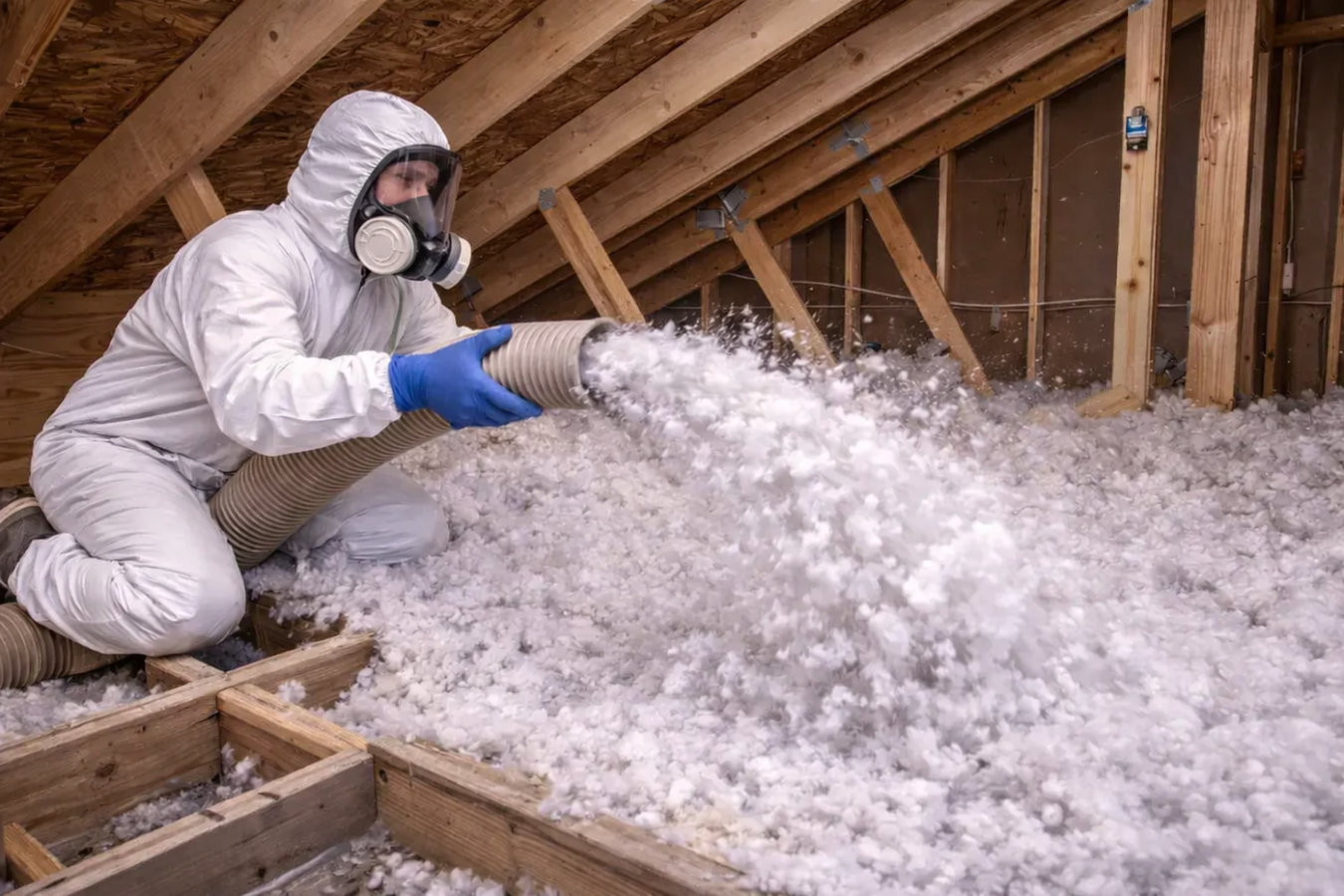
Blown-in insulation in Reading, PA fills your attic with loose fiberglass or cellulose insulation that covers irregular framing and seals the gaps batts can not reach - most jobs are completed in a single morning with no disruption to your day.
Reading has one of the oldest housing stocks in Pennsylvania. If your home was built before 1960, the attic likely has far less insulation than current standards recommend - or none at all in some areas. The result is a furnace that runs constantly from October through April, and heating bills that keep climbing. Blown-in insulation is one of the most effective ways to address that, because the loose material fills the same irregular cavities and old framing that Reading row homes and Cape Cods are built with.
If your home also needs air sealing at the attic floor, pairing that with blown-in insulation delivers the best results. Our home insulation service covers the full picture when more than one area needs attention.
If your gas or electric bill spikes from October through March and you have not changed your thermostat habits, heat loss through the ceiling is a likely cause. Reading winters are long enough that even a modest insulation gap translates into hundreds of dollars in wasted energy over a full heating season.
A large share of Reading's housing stock was built before 1960, when insulation standards were far below what is recommended today. If you have never had insulation work done and your home is more than 60 years old, there is a strong chance your attic is significantly under-insulated.
If upstairs bedrooms or rooms directly below the attic feel drafty even when the thermostat is set normally, heat is escaping through the ceiling above those spaces. This is especially common in older Reading row homes and Cape Cod-style houses.
If you look into your attic and can clearly see the wooden framing between the insulation, you do not have enough. Properly insulated attics in Pennsylvania should have a thick, even layer that completely covers and rises well above the framing.
Our blown-in insulation service starts with a thorough assessment of your attic - measuring existing depth, checking for moisture or pest damage, and identifying any air gaps around light fixtures, pipes, or framing penetrations. We seal those gaps before any insulation goes in, because air sealing is what makes the insulation effective. Skipping that step is one of the most common shortcuts contractors take, and it leaves your home underperforming no matter how much material goes on top.
We install both fiberglass and cellulose blown-in materials, and we will explain which is appropriate for your specific attic conditions. Cellulose is particularly effective in Reading's older housing stock because it settles into tight, irregular spaces. If your home also needs insulation in the walls or other areas, our attic insulation service can address the attic floor comprehensively, and we can discuss a whole-home plan that includes other areas as well.
Every job includes a final depth check at multiple points to confirm even coverage, and we document the completed work so you have a record of what was installed.
Best for attics needing a fast, dry, non-settling option.
Ideal for older homes with irregular framing and tight cavities.
The most effective combination for homes with drafts and high bills.
For homes with some insulation already in place that just needs more depth.
Reading sits in Berks County, where average January temperatures regularly drop into the low 20s and heating season runs from October through April. That is six months of your furnace working against the cold. Homes without adequate attic insulation lose a significant share of that heat straight through the ceiling, and it shows up on your bill every month.
The housing stock in Reading makes this especially relevant. The majority of homes in the city were built before 1940, and many date to before 1920. Blown-in insulation is the right tool for these homes precisely because the loose material conforms to the irregular framing and odd-shaped cavities that century-old construction creates. Rigid batts leave gaps in those same spaces. The humidity and basement moisture common in the Schuylkill River valley also mean that any insulation project should include a moisture check before new material goes in.
We serve homeowners throughout the Reading area, including Pottstown, Norristown, and Lebanon. If you are just outside Reading in one of the surrounding boroughs, we still come to you.
We respond within 1 business day. We will ask a few basic questions about your home - age, whether you have had insulation work before - to understand what is likely needed before we visit.
We go up into your attic, measure existing depth, and check for moisture, damage, or air gaps. This visit takes 30 to 45 minutes. No cost, no obligation. You will receive a written estimate afterward explaining exactly what we recommend and why.
On installation day, we seal any gaps around light fixtures, pipes, and other penetrations before any insulation goes in. This step is what separates a quality job from one that looks right but does not perform.
The blown-in process is fast - most attics are done in under two hours. We check coverage depth at multiple points to confirm even distribution, then clean up and walk you through the completed work.
We respond within 1 business day. There is no obligation - submit your request and someone from our office will call to schedule a free on-site estimate at a time that works for you.
(484) 878-3671Every project starts with a free written estimate, and we document the materials and coverage we install on each job. You get a clear record of the work and pricing up front, with no surprises on the invoice.
We have been working in Reading and the surrounding area since we opened, and we know the housing stock here - the row homes, the Cape Cods, the pre-war construction - better than a contractor who drives in from two counties away.
We seal gaps around penetrations before blowing in any material. Most contractors skip this step. Skipping it means warm air still escapes through those holes regardless of how much insulation sits on top.
Both PPL Electric and UGI Utilities offer rebate programs for insulation upgrades. We know how these programs work and can help you confirm eligibility before the job, so you are not leaving money on the table. Check current programs at the U.S. Department of Energy energy saver portal.
We are a local contractor, not a national franchise. Every estimate is free and comes with a clear explanation of what we found and what we recommend. If you do not need more insulation, we will tell you that too.
A whole-home insulation assessment covers every area - attic, walls, basement, and crawl space - so nothing gets missed.
Learn moreComprehensive attic insulation service that addresses the ceiling plane, ventilation, and the full envelope of your attic space.
Learn moreSpots fill up fast heading into fall - call today and we will get you on the schedule before the heating season starts.