Loading...
Serving Reading, PA and surrounding areas. (484) 878-3671
Reading Insulation is an insulation contractor serving Allentown, PA with home insulation, attic insulation, and crawl space services. We have been serving the Lehigh Valley since 2022 and respond to all inquiries within one business day.
More than half of Allentown's housing was built before 1960, and many of these homes have never had a full insulation assessment. Cold rooms in winter, rising energy bills, and drafts near outlets are signs that the home's thermal envelope has gaps. Home insulation addresses the whole house, not just one area, which produces more consistent comfort improvements across all floors and rooms.
Attic insulation is where most Allentown homes lose or gain the most heat. In the city's pre-war row homes and West End houses, original attic insulation has often settled, compressed, or been partially displaced over decades. Upgrading the attic floor is consistently the highest-return insulation improvement for older homes in the Lehigh Valley's climate, where winter heating loads are significant and summers are humid.
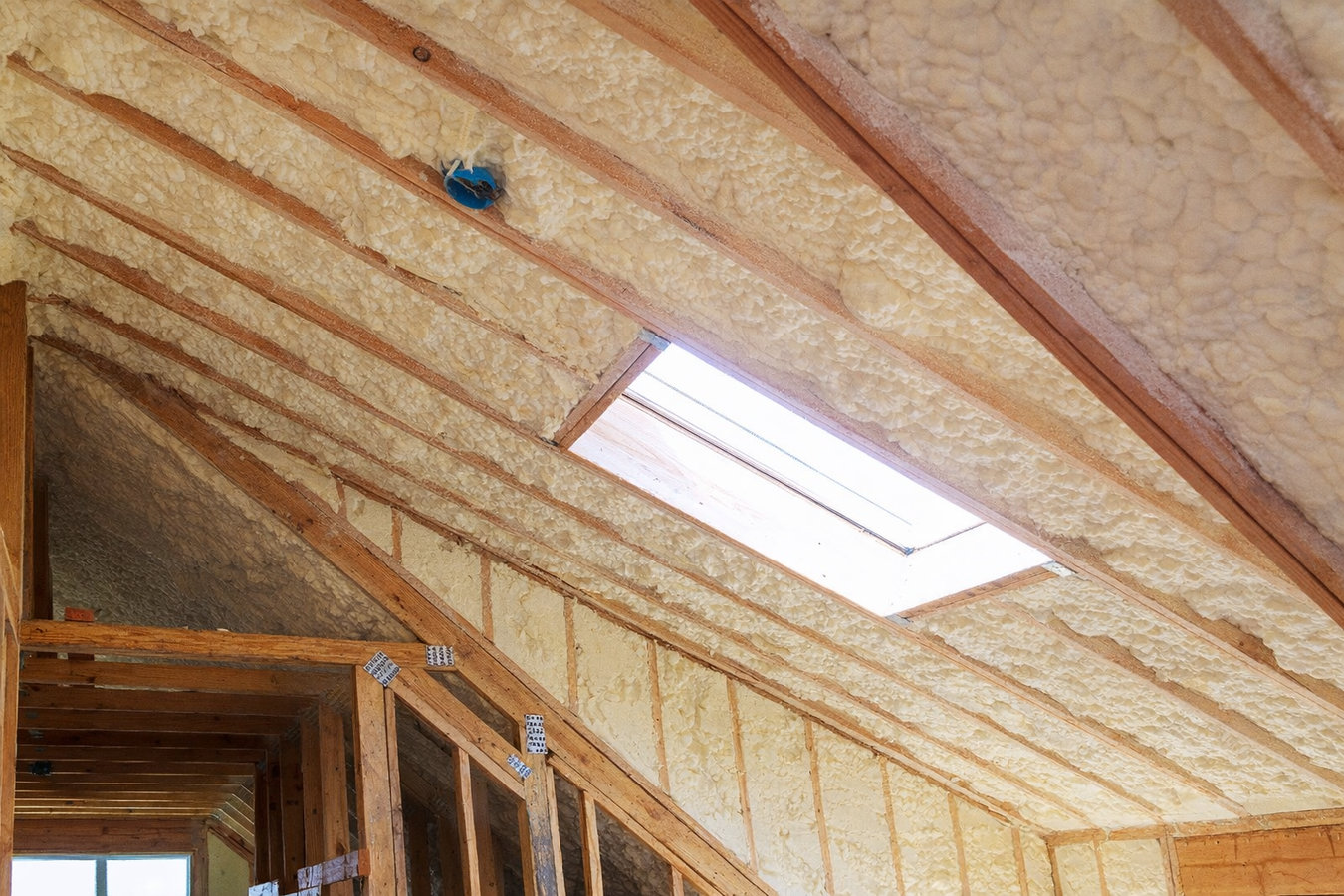
Allentown's row homes and twin houses share walls and have limited exterior surfaces, but the rim joists at the foundation are often completely uninsulated. Spray foam applied at the rim joists and crawl space walls seals air leaks and insulates in a single step, which makes it the most effective solution for the parts of the house that are hardest to reach with traditional materials.
Blown-in insulation is the most practical way to insulate Allentown's older attics without disturbing the ceiling below. It fills around joists, pipes, and wiring without gaps, and can be installed on top of existing material when the original insulation is still in reasonable condition. For Allentown's wide range of attic configurations, from row home ceilings to the larger attic spaces of West End houses, blown-in provides even coverage where batts would leave voids.
Parts of Allentown near Jordan Creek and the Lehigh River sit in flood-prone areas where crawl spaces and basement walls are more exposed to ground moisture than properties on higher ground. Insulating and air-sealing a crawl space prevents moisture from migrating into the floor system and living areas above, which reduces both energy loss and the risk of mold developing in the structure.
Allentown has a mix of brick row homes, mid-century ranches, and Cape Cod houses, and each building type has different retrofit needs. Retrofit insulation improves an existing home's thermal performance without major renovation, using methods suited to the specific wall construction and cavity depth. It is a practical option for Allentown homeowners who want better performance without opening walls or making structural changes.
Allentown is the third-largest city in Pennsylvania, with roughly 125,000 residents and a housing stock dominated by homes built before 1960. The city's older row homes and twin houses in the central, south, and east neighborhoods were built as worker housing in the late 1800s and early 1900s, with brick exteriors and plaster interior walls. Most were constructed without insulation in the wall cavities, and the attic insulation in homes that have been updated is often decades old and no longer performing at its original level.
The Lehigh Valley's climate is the driving factor behind most insulation decisions in Allentown. Average January lows hover around 20 degrees Fahrenheit, and the city sees about 32 inches of snow per year. The ground freezes to depths of 24 to 36 inches during hard winters, and the freeze-thaw cycles that follow put stress on masonry and foundations throughout the spring. Summers bring average July highs around 85 degrees with high humidity, creating conditions where uninsulated crawl spaces and basements develop condensation and moisture problems. The National Weather Service monitors these patterns for Lehigh County and the surrounding region.
The city's neighborhoods also have different needs. The West End's larger stone-and-brick houses often need insulation restoration work that respects historic construction. Row home blocks on the South Side and East Side have denser housing with shared walls, where air sealing matters as much as insulation value. The postwar ranches and Cape Cods near the city's outer edges need different approaches entirely, with wall cavities sized for batt or blown-in material rather than the narrower cavities common in older brick construction.
We have served homeowners throughout the Lehigh Valley since 2022 and work with the City of Allentown Building Safety Division for projects that require permits within city limits. The brick row homes on Allentown's East Side and South Side are common jobs for our crew, and we know how to work around the access challenges those homes present, including tight crawl spaces, plaster ceilings, and brick foundation walls that need a different approach than modern framing.
Allentown's neighborhoods each have a distinct character that affects the work. The West End, known for its early-20th-century houses and mature tree canopy, has homeowners who invest seriously in maintenance and restoration. The South Side and East Side have denser housing with smaller lots and shared walls. Neighborhoods near PPL Center and the downtown core have a mix of housing types, and outer neighborhoods like Midway Manor shift to postwar ranches with different construction entirely.
We also work in the communities directly adjacent to Allentown. Homeowners in Bethlehem to the east face similar housing types and climate conditions, and the two cities' housing stocks have more in common than their separate identities might suggest. If you are in the Lehigh Valley and outside Allentown proper, we still serve you.
Call or send a message and tell us what you have noticed: high heating bills, cold rooms, a musty crawl space, or just an older home that has never had its insulation checked. We respond within one business day to schedule a time.
We come to the property, inspect the areas you want addressed, and check for any moisture or existing damage that should be resolved first. You receive a written quote with no pressure. For most Allentown homes, the assessment takes an hour or less.
We handle any required permits through the Allentown Building Safety Division before work begins. Most jobs are completed in one day. If spray foam is part of the project, we give you a clear re-entry window before the crew arrives.
Before leaving the property, we walk you through what was done, show you the finished areas, and answer any questions. We follow up after the job to make sure the work is performing as expected.
We serve Allentown and the wider Lehigh Valley. Call us directly or use the form and we will be in touch within one business day to schedule an on-site assessment.
(484) 878-3671Allentown is the largest city in the Lehigh Valley and the third-largest city in Pennsylvania, with a population of roughly 125,000. The city grew as a manufacturing center in the 19th and early 20th centuries, and the housing that supported that workforce, compact row homes and twin houses on narrow city lots, still makes up the bulk of the residential stock in the central, south, and east parts of the city. The West End stands apart with its larger single-family homes, tree-lined streets, and early-20th-century architecture.
Allentown is roughly 60 miles north of Philadelphia and about 90 miles west of New York City, which has contributed to steady growth in the surrounding region as people relocate from higher-cost metros. Major employers including Lehigh Valley Health Network, St. Luke's University Health Network, and Air Products and Chemicals have kept the area economically stable, and many homeowners here are long-term residents invested in maintaining and improving their properties. Dorney Park and PPL Center are among the region's best-known landmarks.
Nearby Bethlehem shares Allentown's history as a Lehigh Valley industrial city, and its older housing stock reflects similar insulation needs. Whether you are in Allentown proper or in the neighboring communities that make up the broader metro, the climate and building types across the Lehigh Valley call for the same informed approach to insulation work.
Spray foam creates an airtight seal that stops air leaks and maximizes energy savings.
Learn moreProper attic insulation keeps conditioned air inside and reduces heating and cooling costs.
Learn moreBlown-in insulation fills gaps and hard-to-reach areas for complete, even coverage.
Learn moreSafe removal of old, damaged, or contaminated insulation before new material is installed.
Learn moreInsulating your crawl space reduces moisture, drafts, and heat loss from below your floors.
Learn moreWall insulation reduces outside noise and keeps indoor temperatures stable.
Learn moreAir sealing closes gaps and cracks that let conditioned air escape and drive up energy bills.
Learn moreBasement insulation prevents cold floors, moisture buildup, and energy loss at the foundation.
Learn moreClosed-cell foam provides the highest R-value per inch and acts as a moisture barrier.
Learn moreOpen-cell foam expands to fill every cavity and delivers excellent soundproofing.
Learn moreAttic air sealing blocks the stack effect that pulls warm air out of your home in winter.
Learn moreA vapor barrier keeps ground moisture out of your crawl space and living areas above.
Learn moreProfessional vapor barrier installation protects your home from humidity-related damage.
Learn moreRetrofit insulation adds performance to existing walls and attics without major renovation.
Learn moreCommercial insulation solutions for offices, warehouses, and mixed-use buildings.
Learn moreServing these cities and communities.
Allentown's older homes lose heat faster than their owners realize. Call today and we will come out, assess the home, and give you a straight price before any work begins.