Loading...
Serving Reading, PA and surrounding areas. (484) 878-3671
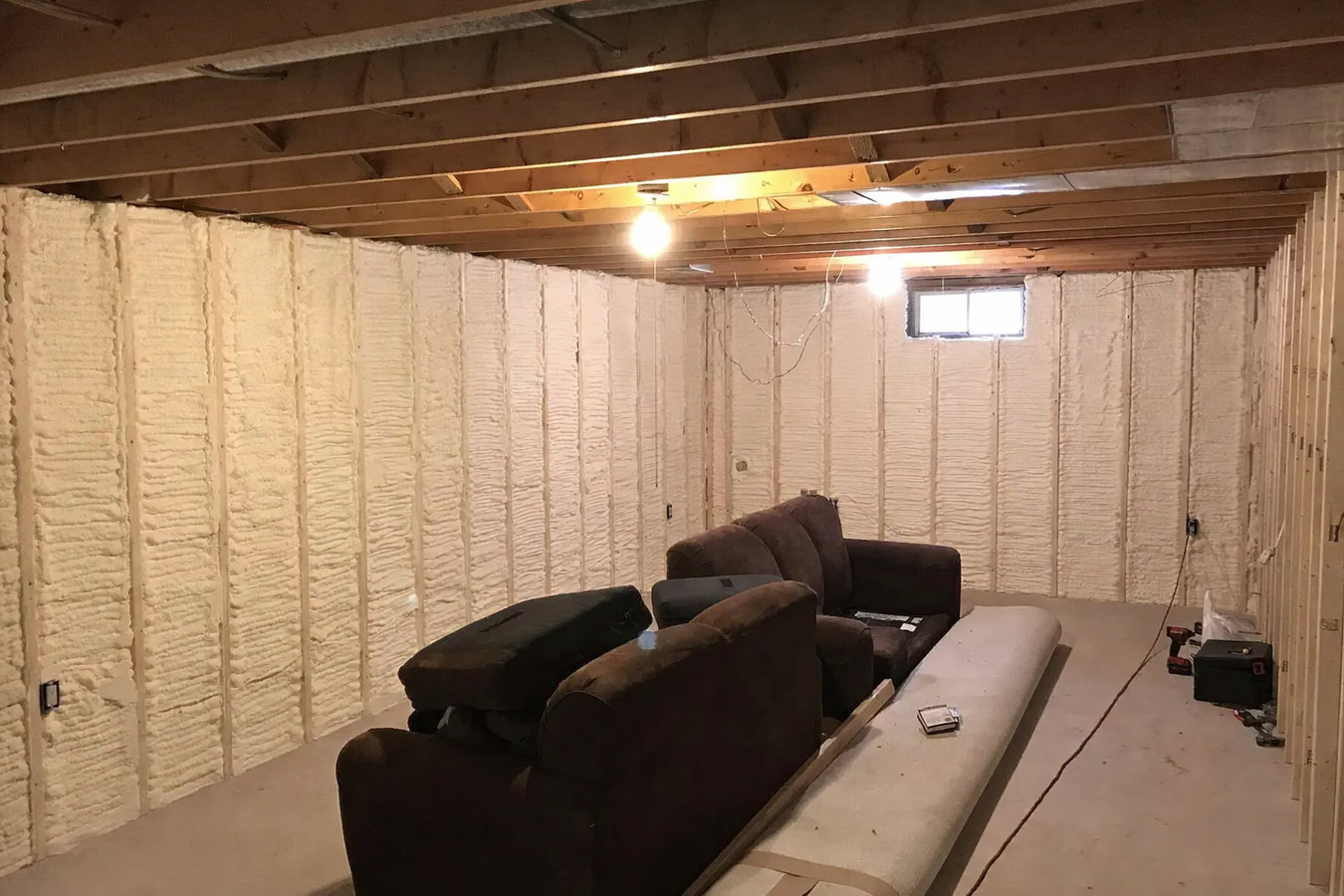
Cold floors and high heating bills in your Reading home often trace back to an uninsulated basement. We assess the moisture, choose the right material for your foundation, and install it correctly the first time.
Basement insulation in Reading, PA creates a thermal barrier along your foundation walls or the ceiling above the basement to stop heat from escaping through the lowest level of your home; most jobs for an average single-family home take one to two days to complete. Without it, your furnace works harder than it needs to, the rooms above your basement stay colder than the rest of the house, and your pipes are at greater risk of freezing during Berks County winters. If you are also losing heat through gaps and cracks at the rim joist, pairing basement insulation with our closed-cell foam insulation gives you both a thermal barrier and a moisture seal in one step.
Reading has a large share of homes built before 1960, many with stone or brick foundation walls that are naturally more porous and irregular than poured concrete. These older foundations have more gaps for cold air to enter, and insulating them takes more care and more material than a newer home. The right approach depends on your specific foundation type, how you use the basement, and whether there is any moisture to address first.
The Schuylkill River valley and Berks County's clay-heavy soils mean that wet basements are common in this area. That makes the moisture question especially important here: any contractor who does not check for dampness before recommending materials is skipping the most critical step in the process.
If the floors on your first level feel noticeably cold in winter, heat is escaping through an uninsulated or degraded ceiling below. This is one of the most common complaints from homeowners in older Reading-area homes, where original insulation, if any was ever installed, has compressed or deteriorated over decades. The problem gets worse each winter as the insulation breaks down further.
If your gas or oil bill keeps rising even though your habits have not changed, an uninsulated or poorly insulated basement is a likely cause. An uninsulated basement accounts for a significant share of total heat loss in older homes during a Reading winter. The furnace compensates by running longer cycles, which drives up costs without making your home feel any warmer.
Stand in your basement on a sunny day and look at the top of the foundation walls where they meet the floor framing above. If you can see light coming through gaps or feel cold air near the rim joist, that area is losing heat constantly. The rim joist is one of the largest and most overlooked air leak points in older Reading homes built before modern insulation standards.
That white chalky residue on stone or concrete walls is called efflorescence, a sign that water has been moving through the wall. Damp walls are common in Reading given the region's soil conditions and proximity to the Schuylkill River valley. Moisture must be addressed before insulation goes in, but seeing it is a clear signal that your basement needs professional attention.
We install basement insulation using spray foam, rigid foam board, and fiberglass or mineral wool batts, depending on your foundation type and budget. For older Reading homes with stone or brick walls, we typically recommend closed-cell foam insulation because it conforms to irregular surfaces and seals air gaps and moisture in a single pass. For smoother poured concrete walls and lower-moisture situations, rigid board with taped joints is a cost-effective alternative that performs reliably.
There are two fundamentally different approaches to basement insulation: insulating the walls, which brings the basement into your home's heated envelope, or insulating the ceiling above the basement, which treats it as an unheated space. Wall insulation is the better choice if you spend time in your basement or plan to finish it. Ceiling insulation works well for pure storage situations. Either way, every project begins with a moisture assessment; if your basement shows signs of water intrusion, we address that first or refer you to the right specialist before anything goes in. For below-grade spaces with persistent moisture, our crawl space insulation service uses similar materials and the same moisture-first approach.
The rim joist, the band of wood framing that sits on top of your foundation wall, is one of the single most impactful areas we insulate. It is exposed to outside temperatures, often uninsulated even in homes that have had some other work done, and responsible for a significant share of total basement heat loss. We include the rim joist as a standard part of every basement insulation project.
Best for older stone and brick foundations where spray foam conforms to uneven surfaces and seals air gaps at the same time.
A cost-effective choice for smoother poured concrete walls where the surface is even enough for board panels to fit tightly.
Right for any homeowner whose basement loses heat at the top of the foundation wall, which applies to most Reading homes.
Works well for homeowners who use the basement purely for storage and want a simpler, lower-cost approach.
Reading sits in a climate zone where winter temperatures regularly drop into the teens and single digits. That kind of cold puts real pressure on an uninsulated basement: heat escapes fast, pipes are at risk of freezing, and your furnace runs overtime to compensate. Homeowners here are not insulating as an upgrade; they are doing it because Berks County winters genuinely demand it. The heating season runs from October through April, and every month of that stretch costs more if your basement is bleeding heat.
The older housing stock throughout Reading adds to the urgency. Row homes and twin houses built before 1940, common throughout the neighborhoods near the Pagoda on Mount Penn and down in the flats along the Schuylkill, were built before modern insulation standards existed. Many have stone foundations that were never meant to be thermally tight and have never been insulated at all. In homes with natural gas or fuel oil heat, which represents a significant share of the Reading area, the payback period on basement insulation tends to be shorter than in milder climates because the energy savings stack up faster.
We serve homeowners across Reading and throughout Berks County. If you are in Norristown, Pottstown, or Lancaster, our crews cover those areas on the same schedule as Reading proper. Older homes throughout this region share the same foundation challenges, and we bring the same moisture-first approach to every job regardless of address.
When you reach out, we ask about your basement's size, whether it is finished, and whether you have had any moisture issues. This helps us arrive prepared. Most Reading-area jobs are answered within 1 business day.
A contractor walks through your basement to check for dampness, existing insulation, and gaps at the rim joist and foundation walls. This visit is your chance to ask questions and get a straight answer on what your basement actually needs.
After the assessment, you receive a written quote that spells out what work will be done, what materials will be used, and the total cost. If a permit is required, we include that in the scope and handle the application on your behalf.
Most jobs take one to two days. Before we leave, we walk through the finished work with you and point out anything you should know about the installation. If a permit was pulled, a city inspector will schedule a follow-up visit to verify the work meets code.
We assess the moisture first, give you a written quote, and explain exactly what your basement needs. No verbal estimates, no pressure.
(484) 878-3671We provide a free written estimate before any work begins and document the materials and coverage installed on every job. You get clear scope and pricing up front, with no pressure to sign on the spot.
We assess every basement for water intrusion before recommending a material or approach. Skipping this step is how mold problems start behind insulation. We catch moisture issues before they become hidden damage.
We install basement insulation across Reading and 11 surrounding service areas, from Lancaster and Lebanon to Norristown and Easton. Local crews mean shorter schedules and contractors who know older Berks County foundations firsthand.
Every estimate we provide is in writing, specifying the material, the coverage area, and the total cost. A written document protects both of us and gives you something to compare when you are getting multiple quotes.
The Insulation Contractors Association of America and the North American Insulation Manufacturers Association set the industry standards we work from on every project. Those standards, combined with Pennsylvania's statewide building code and our own moisture-first process, mean you get a basement that is properly insulated and properly documented from the first visit to the final walkthrough.
Dense spray foam that insulates and seals moisture in one pass, a strong fit for damp Berks County basements.
Learn moreInsulate the crawl space floor and walls to stop cold air from rising into your living areas from below.
Learn moreReading winters do not wait. Lock in your installation date before the cold sets in and your heating bills climb again.