Loading...
Serving Reading, PA and surrounding areas. (484) 878-3671
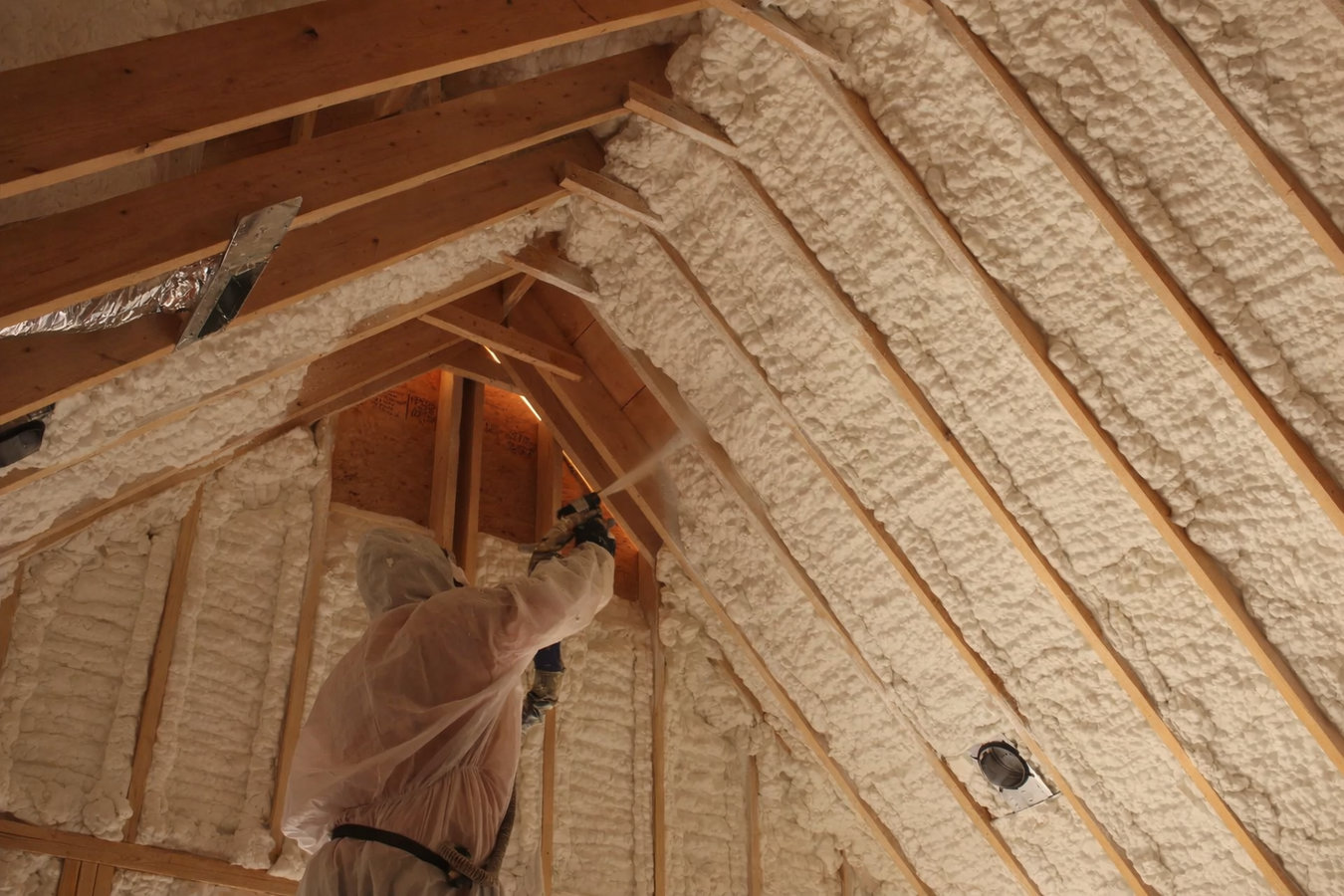
Drafty rooms and climbing heating bills usually mean your attic or walls are leaking air. Open-cell spray foam seals every gap and insulates in the same step.
Open-cell foam insulation in Reading, PA is a soft, flexible spray-applied material that expands to fill gaps and create a seamless air barrier wherever it is applied, most residential attic and crawl space jobs take one full day to complete. Because it seals air leaks at the same time it insulates, it solves two problems in a single step in a way that fiberglass batts simply cannot. If you are weighing this against the denser moisture-resistant option, our closed-cell foam insulation page explains when that product is the better fit.
Reading sits in climate zone 5, where winters are genuinely cold and heating costs are a real household expense from November through March. A large share of the city's housing stock dates to the early 20th century, and those homes were never designed with air sealing in mind. Spray foam conforms to whatever surface it meets, which makes it a stronger fit for irregular framing and century-old construction than any material that requires a clean, uniform surface to work properly.
Open-cell foam is vapor-permeable, meaning it allows some moisture to pass through rather than blocking it entirely. In most above-grade applications like attic floors and wall cavities, this is an advantage. In damp below-grade spaces, your contractor should assess moisture conditions before recommending this product. A good estimate includes that assessment.
If your gas or electric bill climbs sharply from November through February and rooms still feel drafty at a reasonable thermostat setting, air leakage is almost certainly part of the problem. Reading winters are cold enough that even moderate leakage through an uninsulated attic floor or rim joist can add hundreds of dollars to your annual heating costs. The fix is often faster and less expensive than homeowners expect.
Hold your hand near an interior wall outlet or light switch on a cold day. If you feel a draft or noticeably cool air, air is moving through your wall cavities from outside. This is common in older Reading homes where the wall framing was never air-sealed, and spray foam in the attic floor and rim joist area can dramatically reduce this effect.
Ice dams are ridges of ice that build up along the edge of a roof after a snowfall. They are a sign that warm air is escaping through the attic and melting snow unevenly. Reading gets enough winter precipitation that ice dams are a real concern, and they can cause water damage to gutters and interior ceilings. Properly insulating and air-sealing the attic floor is one of the most effective ways to prevent them.
A large portion of Reading's housing stock dates to the early and mid-20th century, and many of those homes have little or no attic insulation by today's standards. If you have never had an energy audit or insulation upgrade, there is a good chance your attic floor has gaps, compressed batts, or bare spots that are costing you money every month.
We apply open-cell spray foam to attic floors, rim joists, wall cavities, and accessible crawl spaces throughout Reading and Berks County. Every job includes a walkthrough of the finished work so you can see what was covered and ask questions before we leave the site. For homeowners who want a broader comparison before deciding, our attic air sealing service addresses cases where the priority is closing penetrations and gaps before adding or upgrading insulation on top.
The most common project in Reading is the attic floor, where decades of settled or compressed fiberglass have left gaps that are invisible from below but significant in terms of heat loss. We remove or temporarily lift existing insulation, seal the ceiling surface below it, and replace or upgrade the insulation layer before we leave. This two-step approach delivers better results than either air sealing or insulation alone.
We also handle rim joist projects, which are among the highest-impact and lowest-disruption jobs in older homes. The rim joist runs along the top of your basement or crawl space walls and is one of the biggest air leakage points in most pre-1960 construction. A single day of work on the rim joist and a few other key areas can produce a noticeable improvement in comfort during the first cold season. For homes where moisture is an additional concern alongside air sealing, closed-cell foam insulation may be the better recommendation.
Suits homes where the primary heat loss is through an unfinished attic above the living space.
Suited to older homes where the gap between the foundation wall and floor framing is a major air leak point.
Suited to renovation projects where wall cavities are exposed and batt insulation is inadequate or missing.
Suited to dry above-grade crawl spaces where air sealing and insulation are needed but moisture is not a primary concern.
Reading sits in Berks County in southeastern Pennsylvania, where January lows regularly drop into the teens and the heating season runs from late October through early April. The city's housing stock is among the oldest in the state, with a large share of homes built before 1960 and many dating to the early 1900s. Those homes were built before air sealing was a concept, which means they have dozens of small openings around pipes, wires, framing connections, and attic hatches that fiberglass batts simply sit on top of rather than close. Spray foam fills those gaps completely, which is why it tends to outperform batt insulation in older Reading homes regardless of R-value comparisons on paper.
PPL Electric Utilities, which serves much of Berks County, offers an energy efficiency rebate program that can offset part of the cost of an insulation upgrade. Federal tax credits for qualifying energy improvements are also currently available. Homeowners in Norristown, Pottstown, and Lancaster face similar housing conditions and are also eligible for these programs, so the same approach applies across the region.
Pennsylvania also requires a building permit when insulation work changes the thermal envelope of your home, such as spraying foam in an attic or crawl space for the first time. A contractor who pulls this permit through the City of Reading's Bureau of Codes Administration is doing the job by the book. Inspected, permitted work protects you now and is a positive line item if you ever sell the home.
When you reach out, we ask about the size of your home, the area you want insulated, and any specific comfort problems you have noticed. Most inquiries receive a response within 1 business day and we schedule an in-home estimate at no charge.
We walk through the area to be insulated, assess what is already there, check for any moisture or wiring concerns, and measure the space. You receive a written estimate specifying the area, thickness, and total cost, including a clear answer on whether a permit is required.
If the project requires a permit, we pull it before work begins. You will need to clear the work area and plan for you, your family, and your pets to be out of the home for at least 24 hours after installation. We walk you through the prep so nothing delays the job.
The crew applies foam in even passes across the target area. Most attic or crawl space jobs are completed in a single day. Before leaving, we walk through the finished work, confirm re-entry time, and provide any documentation you need for a rebate application or federal tax credit.
We respond within 1 business day. No sales pitch, no obligation - just a straight answer about what your home needs and what it will cost.
(484) 878-3671We provide a free written estimate before any work begins and document the materials and coverage installed on every job. You get clear scope and pricing up front, with no pressure to sign on the spot.
Our installers have completed training through the Spray Polyurethane Foam Alliance, the national trade organization for this trade. Proper application technique is the difference between consistent coverage and thin spots that undo the benefit of the whole job.
Row homes in Hampden Heights, twins in Pennside, older detached houses throughout Berks County, we have worked on them all. Irregular framing, tight attic access, and aging construction are not surprises to us; they are the standard for this area.
PPL Electric Utilities offers rebates for qualifying insulation upgrades in Berks County, and federal energy efficiency tax credits are also currently available. We walk you through what your project qualifies for before we start so you know the actual out-of-pocket cost.
Registration, insurance, trained installers, and local rebate knowledge are the baseline for any contractor you should consider. The Spray Polyurethane Foam Alliance publishes installer training standards that our crews follow on every job. We do not subcontract the spray work to untrained helpers, because the quality of the application is what determines whether the finished job actually performs, and that is especially true with open cell spray foam, where off-ratio mixing or improper lifts produce a product that shrinks and loses adhesion over time.
Targeted sealing of attic penetrations and top plates to stop heat loss at the source before adding insulation.
Learn moreThe denser, moisture-resistant foam option for crawl spaces, rim joists, and below-grade applications.
Learn moreFall booking slots in Reading fill quickly once heating season approaches. Call today or submit a request online to lock in your estimate before the rush.